
From Junior Designer to Prompt Engineer: How Generative AI Is Reshaping Creative Production
Generative AI is automating entry-level creative work, forcing agencies to redefine what junior talent does and how creative teams are structured.
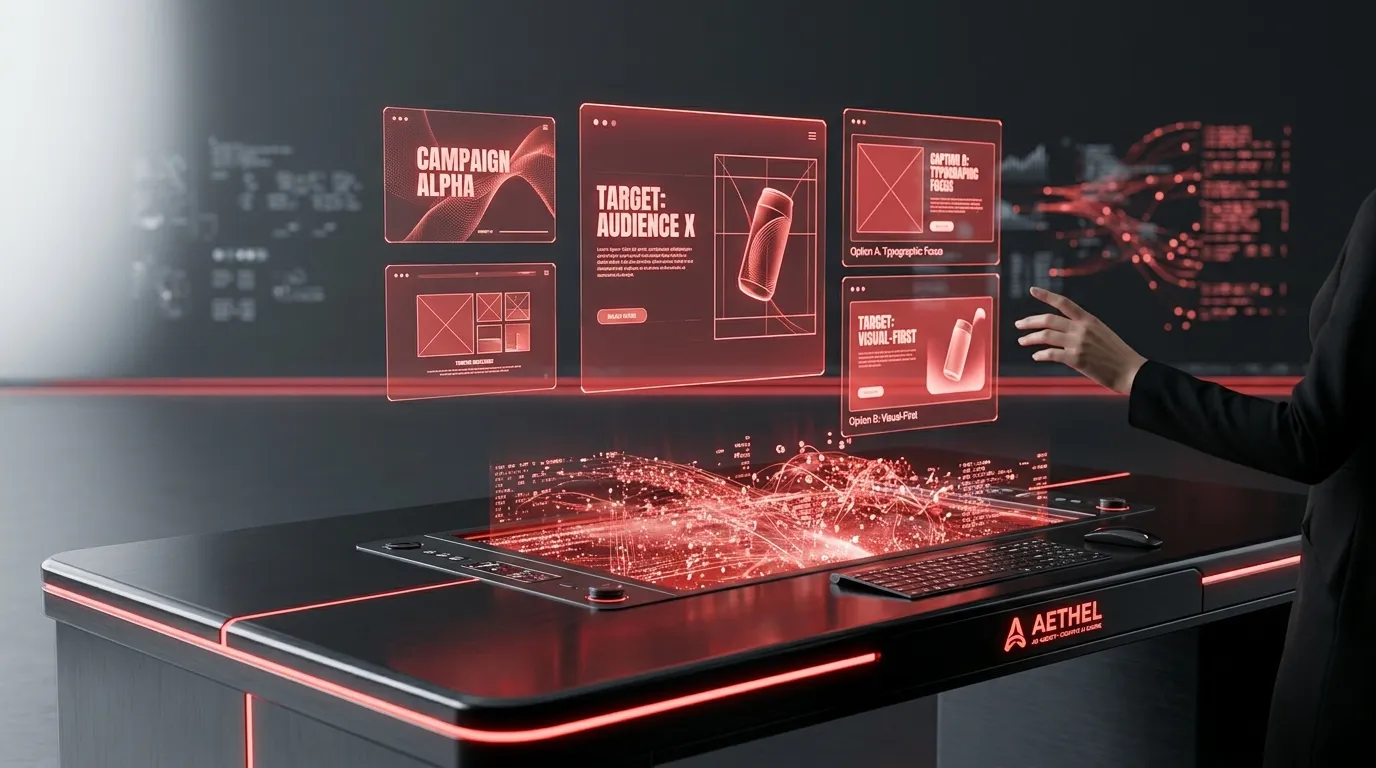
Generative AI has moved from novelty to production tool inside agency creative departments. Ad variants, product imagery, and first-draft copy that once consumed hours of junior designer and copywriter time can now be produced in seconds. The result is not the disappearance of creative talent, but a fundamental redefinition of what early-career roles in an agency actually look like.
Daronet helps agencies restructure creative workflows around generative tools without losing the craft and brand judgment that make work distinctive.
The Traditional Creative Pipeline Is Being Compressed
Entry-level creative roles were traditionally built around volume production: churning out banner variations, resizing assets, and drafting initial copy options for senior review.
- Volume Work Is Now Instant: Generating dozens of ad variations or layout options is now a prompt, not a day of production work.
- The Junior Role Is Shrinking: Tasks that used to train junior staff through repetition are increasingly automated, removing a traditional entry point into the industry.
- Quality Control Becomes the Bottleneck: With output volume no longer a constraint, the limiting factor shifts to reviewing, curating, and refining AI output at scale.
How Creative Teams Are Restructuring Around AI
Agencies that are adapting well are not simply replacing junior staff with software; they are redesigning the creative pipeline itself.
1. The Rise of the Creative Technologist
A new hybrid role is emerging: part designer, part prompt engineer, skilled at directing generative tools to produce on-brand output efficiently. This role requires creative judgment plus fluency in AI tooling, not pure production skill.
2. Senior-Heavy Review Structures
With junior staff producing less raw volume, creative review now concentrates more responsibility with senior creatives earlier in the process, curating AI output against brand standards before it reaches clients.
3. Brand Guardrails Built Into AI Workflows
Agencies are investing in custom-trained models and style guides embedded directly into generative tools, ensuring AI output stays consistent with a client’s visual identity rather than producing generic results.
Rebuilding Your Creative Talent Pipeline
Redefine the Entry-Level Role
Design junior positions around AI direction, quality control, and brand consistency rather than manual production, giving new hires a meaningful path into creative judgment earlier in their careers.
Invest in Prompt and Tooling Literacy
Train creative staff at every level on the specific generative tools your agency relies on, treating prompt craft as a core creative skill rather than a technical afterthought.
Protect Space for Original Human Concepting
Reserve dedicated time for concept development untouched by AI acceleration, ensuring your agency’s output still carries genuinely original ideas rather than converging on generative sameness.
Creativity Still Needs a Human Point of View
Generative AI has removed the drudgery from creative production, but it has not removed the need for taste, judgment, and original thinking. Agencies that rebuild their creative pipeline around AI-assisted production, while protecting the human point of view that makes work distinctive, will out-create competitors still treating generative tools as a threat rather than an instrument.
Ready to modernise your enterprise stack?